
Receiving ingredients
HACCP isn't as complicated as people make it seem, if you break it down into its parts. This is the first in our HACCP explained series, and we're starting where your food starts: the moment ingredients arrive at your door.
Why ingredients matter
You need to make sure your ingredients were safe when they arrived.
Think of it like a change of custody from the supplier to you. Up until the delivery, keeping the ingredients safe was the supplier's job. Once you sign for them, it's yours.
If something was already wrong when it came off the truck, receiving is your chance to catch it before it ends up in your product.
What to check when ingredients arrive
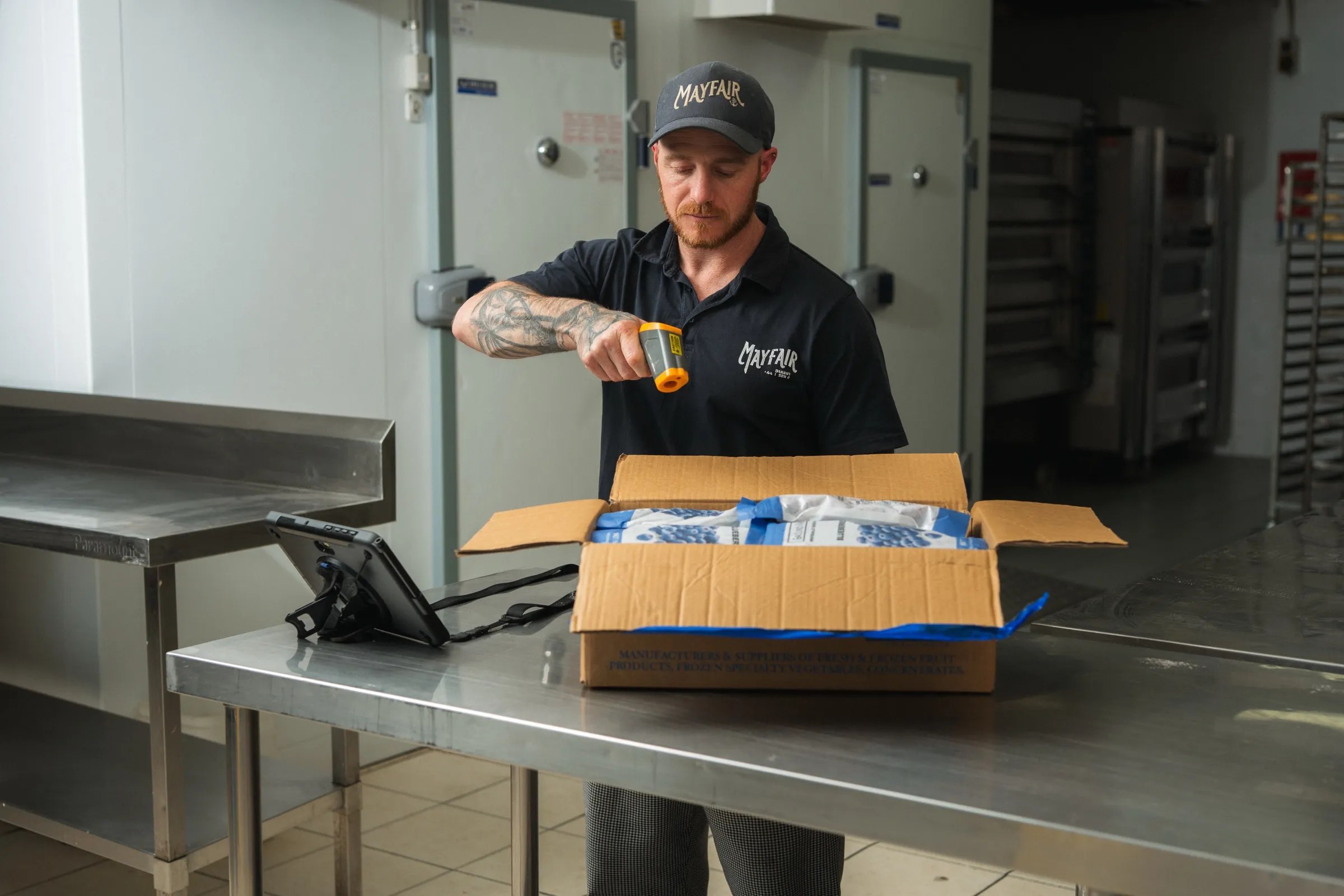
Temperature. For chilled, that means checking they're 5°C or colder. For frozen, it's checking they're frozen solid. Use a thermometer and check before the goods go into your cool room or freezer.
Condition. Check the packaging isn't damaged, open or dirty, and there are no signs of pests.
Labelling and dates. Check you've got the right product, it's clearly labelled, and it's within its use-by or best-before date.
If something fails a check, don't accept it into your stock. Reject it or set it aside, and let the supplier know.
What to record
For each delivery, record:
- the date and who checked it
- the supplier and the product
- the batch code
- the temperature (for chilled and frozen goods)
- whether you accepted or rejected it, and what you did if there was a problem.
Why the batch code matters
You need to record the ingredient's batch code, which is printed on the pack.
That way, if the supplier calls saying it was a bad batch, you can pinpoint the problem.
You can see exactly which of your products used that batch and where they went, instead of pulling everything off the shelves to be safe. It's the first link in tracing your product from supplier to customer.
If the supplier doesn't use batch codes, you could use the ingredient's use-by date instead.
Record it as the work happens
Filling in a sheet at the end of the day from memory is where mistakes creep in or checks get missed.
The best records are written at the time, by the person doing the check. That's what keeps your products and brand safe.